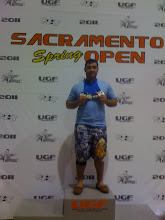
Yesterday I stayed behind at the Sacramento Judo Club and had a conversation with Sensei Takeda. I had asked him about the whereabouts of a gentleman that had trained at the Club when I first started back in 2008. Sensei Takeda stated that the gentleman no longer wished to train with the Club and had gone some where else to train. Sensei Takeda seemed sadden when I asked. Sensei said that he has taught many students and had brought them up to the ranks of Black Belt but very few decide to give back and help to run the Club.
Sensei Takeda has given his whole life to Judo, often he said it has even caused many arguments between his wife and himself, he has run down vehicles traveling from one clinic or tournament to the other and has done all this with no pay. he said that the old way of the Japanese and Judo in California was always to be non-profit and to give back to the community or as Kano Sensei stated "For the mutual welfare and benefit" of all who partake in the wonderful sport and art of Judo.
We discussed the current state of Judo and that it most likely will become a "for profit" business, like what Jimmy Pedro and Rhadi Furgesson have created. Most of the schools on the East Coast are for profit and are very expensive to join in comparison to the clubs in California. Sensei believes that the old Japanese way is dying out and that as time goes many future instructors will want to be paid for their instruction and no longer give their knowledge for free.
I was sadden to hear this, as I looked at Sensei Takeda I could see his sadness in his eyes. I shook his hand and thank him for his sacrifice that he has done again and again for the past forty plus years.
I know have many friends in the Judo community in Sacramento, I know that Sensei Goodall and the rest of the Senseis at Team Sacramento volunteer their time to give back and so does Okubo Judo. If you practice Judo and you know that your Senseis freely volunteer time out of their life to impart their knowledge on to you please, PLEASE, shake their hand and let them know that it does mean something to you.
To all the Senseis that volunteer to teach and expect nothing in return I salute you!!!
Be Blessed!!!!
Showing posts with label Sacramento Judo Club. Show all posts
Showing posts with label Sacramento Judo Club. Show all posts
Thursday, January 13, 2011


Judo Training
Tonight's Judo training seemed more intense to me. I was really tired this evening due to getting off work really late. I almost did not go, but I decided I had to because I will not be able to go to BJJ on Thursday so I went.
I got to class a few minutes late so I missed the frst part of the warm up. After we stretched we did more to the basic Judo Newaza sweeps we do. I work with a different person this time, instead of Sensei Weiler. He was very eager to pick my brain on Newaza. Of course he wanted me to show him real exotic things like the D'arce choke and the rubber guard. I told him I do not even know how to do those things and that most matches are won by the most basic chokes and locks. I advised him to drill the basics and focus on the fundamentals of the closed guard and open guard for now, and to also work on his Osaecomi-Wazi (forgive me for my misspellings). I showed him some of the sweeps I use from the open guard and some of the theory of BJJ and how to use what space and movements your opponent give you to make the sweep happen.
We did 30 minutes of Newaza Randori and then move on to Ta-Chi Waza. We set up the poor, old broken down crash pad and practiced Kuzushi drills and then threw Uke on to pad with our throw. I did alright with Uchi Mata, but was really getting a clean powerful throw with Harai Goshi. Sensei Takeda had us switch to Osoto Gari and all of mine were horrible!!! My foot was too high or my hips did not go through enough to generate power for the throw, defiantly something I will work on in the future.
Last we did Randori of course and I was able to use my grip figthing to be defensive but still be active so not have any stalling called on me. Sensei Weiler kept trying to throw me with Osoto Gari but I was able to counter by grabbing his leg and using a wrestling technique called "running the pipe" as a legal counter.
I did take a thumb to the eye so I had to sit out a round as I could not see out of my left eye. Class well and was very enjoyable and I am glad I went to train!!!!
Sensei Takeda told me he knows that I am ready to be promoted to Blue Belt in Judo!!! I need to study the guideline that he has given me so I can test at the end of the month. I hope to be a double Blue!!!
Be Blessed!!!
I got to class a few minutes late so I missed the frst part of the warm up. After we stretched we did more to the basic Judo Newaza sweeps we do. I work with a different person this time, instead of Sensei Weiler. He was very eager to pick my brain on Newaza. Of course he wanted me to show him real exotic things like the D'arce choke and the rubber guard. I told him I do not even know how to do those things and that most matches are won by the most basic chokes and locks. I advised him to drill the basics and focus on the fundamentals of the closed guard and open guard for now, and to also work on his Osaecomi-Wazi (forgive me for my misspellings). I showed him some of the sweeps I use from the open guard and some of the theory of BJJ and how to use what space and movements your opponent give you to make the sweep happen.
We did 30 minutes of Newaza Randori and then move on to Ta-Chi Waza. We set up the poor, old broken down crash pad and practiced Kuzushi drills and then threw Uke on to pad with our throw. I did alright with Uchi Mata, but was really getting a clean powerful throw with Harai Goshi. Sensei Takeda had us switch to Osoto Gari and all of mine were horrible!!! My foot was too high or my hips did not go through enough to generate power for the throw, defiantly something I will work on in the future.
Last we did Randori of course and I was able to use my grip figthing to be defensive but still be active so not have any stalling called on me. Sensei Weiler kept trying to throw me with Osoto Gari but I was able to counter by grabbing his leg and using a wrestling technique called "running the pipe" as a legal counter.
I did take a thumb to the eye so I had to sit out a round as I could not see out of my left eye. Class well and was very enjoyable and I am glad I went to train!!!!
Sensei Takeda told me he knows that I am ready to be promoted to Blue Belt in Judo!!! I need to study the guideline that he has given me so I can test at the end of the month. I hope to be a double Blue!!!
Be Blessed!!!
Monday, January 10, 2011
Judo Training
Judo training was excellent. Did the Judo warm up and then proceeded to Newaza. I drilled with Mike Weiler who is a Shodan (First Degree Black Belt). We always just do some basic sweeps. Like said before on the sweeps I feel just leaves me open for my opponent to take side control. I drill the moves but I highly doubt I will ever use this hip type sweep. I showed Sensei Weiler the Anaconda choke to break down an opponents turtle position. Sensei Weiler really like the Anaconda. I was happy to exchange knowledge with someone who has helped me a lot with my "Big Man" Judo.

We did some Newaza Randori and then moved on to moving drills for Osoto Gari and Ashi Bari. Last we drilled a Ouchi Gari to Kouchi Gari combination. Next came Randori.
I was able to give Sensei Weiler a decent fight although he threw me many times. I was inspired by my buddy Stuart from the U.K. with his view that you should just attack and not worry about being throw because there is nothing to loose.
I was able to hit a Hari Goshi on one of the smaller players using the overhand Russian grip, I am really attracted to the Russian and Eastern European style of Judo. I believe that Russian Judo also is better suited to BJJ. (will write an essay in that theory).
All in all my timing and technique is coming back to me and I do not feel as tired as I did last Monday. Tomorrow I go back to BJJ.
Be blessed.
We did some Newaza Randori and then moved on to moving drills for Osoto Gari and Ashi Bari. Last we drilled a Ouchi Gari to Kouchi Gari combination. Next came Randori.
I was able to give Sensei Weiler a decent fight although he threw me many times. I was inspired by my buddy Stuart from the U.K. with his view that you should just attack and not worry about being throw because there is nothing to loose.
I was able to hit a Hari Goshi on one of the smaller players using the overhand Russian grip, I am really attracted to the Russian and Eastern European style of Judo. I believe that Russian Judo also is better suited to BJJ. (will write an essay in that theory).
All in all my timing and technique is coming back to me and I do not feel as tired as I did last Monday. Tomorrow I go back to BJJ.
Be blessed.
Monday, January 3, 2011
Judo Training
Tonight I made my return to Judo practice at Sacramento Judo Club. I forgot how demanding the sport is. Tai-Chi Waza is very demanding due to the huge emphasis place in the Push-Pull Factor of Human Movement (More on that in a latter blog).
We did a light warm up and stretched; afterwards we practiced some basic sweeps form the guard positions. As a BJJ Blue Belt I find some the sweeps peculiar only because some of them seem to leave you open to having your opponent take side control. Alas I must train Judo with my Judo Goggles on, not my BJJ Goggles. Sensei Tekeda had three of us lay in open guard and ran the rest of the students through to practice fighting from the guard. I enjoyed this because al I have been doing for the last 8 weeks or so is fight from my back, so I was able to give nearly everyone the business.
We did five, five minute rounds of Ne-Waza Randori. I had a great roll with Sensei Tony Comfort, who is very skilled at Ne-Waza and gave me quite a challenge.
Next came the drills for Tai-Chi Waza. We drilled just getting Kazsushi. As we broke Uke's balance we moved up and down the Dojo. I practice Osoto Gari and Kouchi to Ouchi Grai. I was terrible at both.
Then came the Randori; seven five minute rounds of pure hell. I realized that I am decent at grip fighting and avoiding alot of throws, but I am timid when it comes to attacking. I think that I need to just find one or two moves and drill the hell out of them until I become proficient. As stated before drilling is the key to success.
Do any Judokas learning the art have the same problem? Not attacking nearly enough?
Besides that practice went great and I am not as tired as I thought I would be.
Be Blessed!!!
We did a light warm up and stretched; afterwards we practiced some basic sweeps form the guard positions. As a BJJ Blue Belt I find some the sweeps peculiar only because some of them seem to leave you open to having your opponent take side control. Alas I must train Judo with my Judo Goggles on, not my BJJ Goggles. Sensei Tekeda had three of us lay in open guard and ran the rest of the students through to practice fighting from the guard. I enjoyed this because al I have been doing for the last 8 weeks or so is fight from my back, so I was able to give nearly everyone the business.
We did five, five minute rounds of Ne-Waza Randori. I had a great roll with Sensei Tony Comfort, who is very skilled at Ne-Waza and gave me quite a challenge.
Next came the drills for Tai-Chi Waza. We drilled just getting Kazsushi. As we broke Uke's balance we moved up and down the Dojo. I practice Osoto Gari and Kouchi to Ouchi Grai. I was terrible at both.
Then came the Randori; seven five minute rounds of pure hell. I realized that I am decent at grip fighting and avoiding alot of throws, but I am timid when it comes to attacking. I think that I need to just find one or two moves and drill the hell out of them until I become proficient. As stated before drilling is the key to success.
Do any Judokas learning the art have the same problem? Not attacking nearly enough?
Besides that practice went great and I am not as tired as I thought I would be.
Be Blessed!!!
Saturday, January 1, 2011
DAX Moskito Judogi

Today I placed my order for one of the infamous Dax Moskito double weave Judogis. My friend Jonel from Team Sacramento Judo team highly recommended it and said that it is thick and has a slimmer cut and can make the transition from Judo to BJJ easily.
This is good as after BJJ practice Team Sacramento immediatly starts Judo practice and I would like to join in and not have to rush to change gis.
I will write a review for the Moskito once I can put some miles on it.
Be Blessed!!!
Wednesday, December 29, 2010
The Four Pillars of Judo
This excellent article was written by my Sensei Victor Anderson from Sacramento Judo Club. Anderson Sensei has help my tremendously in the "non-convential warfare" of Judo, Grip Fighting no handed Judo etc.
All credit to Anderson Sensei, I do not own the rights to this excellent intellectual property, I just thought I share it with you.
The Four Pillars Of Judo
By Victor Anderson
Sandan, Sacramento Judo Club
Several years ago when I was in Korea, my sensei had a simple question on one of his promotion examinations. That question was, "What do you think about judo?" I dashed off some platitudes about maximum efficiency, improving the character and so forth. Good enough to pass. Lately, that question has come to haunt me more and more. There are some who say Judo is a way of life, others talk about sport, and still others argue about martial arts.
To begin with, we should look to what Dr. Kano, the founder of judo said. Kudo sensei in his book, Dynamic Judo, quotes Dr. Kano as saying:
"Judo is the way to the most effective use of both physical and spiritual strength. By training you in attacks and defenses it refines your body and your soul and helps you make the spiritual essence of judo a part of your very being. In this way you are able to perfect yourself and contribute something of value to the world. This is final goal of judo discipline."
No words about sport here. In the second edition of the Kodokan Judo, Dr. Kano devotes a brief chapter to the philosophy of Judo. Here, Dr. Kano does talk about sport and its role in character development. He also talks about the use of physical education in training the body and the mind. Dr. Kano speaks of the use of kata as a training tool.
The two great ideas of Kodokan Judo are maximum efficiency and mutual welfare and respect. If one studies the main source book of Judo, Kodokan Judo, one comes to realize that this is an art that involves physical education, sport, and unarmed combat (self defense). I believe that the Judo fields of study are best shown by the following diagram.
All of the areas of study overlap. Physical education, that is the training of the mind and body, will have a bearing on both sport and combative studies. The human body moves because of muscular action which is the result of mental effort. You think about walking across the room and then walk across the room. The mind leads, the body follows, and all of the wonderful mechanics of walking occur. Without training in the skills needed, the body and mind cannot perform the necessary tactical and strategic movements needed for both sport and unarmed combat.
The relationship between sport and unarmed combat is not easily seen at first. Combat sports evolved out of the need for warriors to train in a competitive manner. One could simply engage in full fledged fights. The problem of course is the attendant injury rate and loss of life. So, drills and games were invented to provide a way for warriors to practice needed skills with reasonable safety. What defines reasonable safety varies with cultures and historical periods. A good example of a combat sport is the joust. The joust was invented by European knights as a game to train in the use of lance. The game evolved to the point to where special armor, saddles, lances, and of course complex rules came into existence. However, many of the core values of using a lance on horseback in combat are trained by the joust. Combat sports all train certain core values that are important to the type of combat from which the sport evolved. Target shooting with a pistol from a fixed stance is often seen as very distant from the use of a pistol in combat. However, the ability to hit the target is an important core value for combat shooting.
In sport judo the techniques are confined to throwing (nage waza), locking the elbow joint (kansetsu waza), chokes (shime waza), and hold downs (osaekomi waza). Contest techniques are further restricted to those that will not result in severe injury, provided the competitor is trained in falling techniques (ukemi). What then is the relationship of sport judo to judo as unarmed combat? In my opinion, the most important relationship is that judo matches are conflicts between two human beings. You must attempt to use your techniques against an adversary. In judo tournament, techniques are judged on effectiveness. To win by throwing, you must actually throw. It is extremely easy to throw a willing subject. It is an entirely different thing when the opponent is fighting back. Another issue is the simple fact that judo as a sport is rough. It is a full contact sport. You will be bruised, have your joints twisted, endure minor sprains, heat, exhaustion, and just general discomfort. In the small, tight world of the judo competitor your opponent is very close, at arms length or less. In this tiny universe you must learn to deal with fear, failure, pain, hardship and the joy of success. This type of training prepares you for what the U.S. military calls the "shock of combat." In other words what happens when someone hits you on your nose and the pain and bleeding start. Next, the ability to fall well is extremely valuable. In any fight one is subject to falls due to any number circumstances. For example, your opponent may throw or knock you down, or you may slip and fall due to conditions such as mud or ice. Being able to maintain your mental equilibrium even while falling and after is important. So sport judo provides some very core values in addition to building skill in grappling techniques.
Unarmed combat (what many label as self defense) is different from sport. In a sense this is the actual battlefield application of techniques. It is important to remember that unarmed combat has a wide range of applications. The goals and needs of the civilian are different from the policeman which are in turn different from the soldier. Unarmed combat techniques within Kodokan Judo are found in the various kata. The kime no kata and Goshin jitsu kata are the two main examples. Training for self defense, police work, or any other application of unarmed combat is generally done in the form of katas. Katas are of two types. Generally when kata is spoken about, the reference is to formal exercises that are prescribed by those in authority. In the case of Judo, this is generally considered to be the Kodokan. One may also have informal drills which are used to train specific skills. Because the techniques used in unarmed combat may result in serve injury, kata is used as the training vehicle.
What is interesting about judo kata, is that they are intended to teach principles as opposed to just technique. These principles are often applicable to sport as well as unarmed combat. The student of judo who desires to know more about unarmed combat needs to study the kata. The student also needs to realize that ideas and techniques are useful in both areas.
An important difference is to recognize that sport judo rules have a rationale. First, the rules exist to provide a relatively safe means of competition. Second, the rules provide a means of defining the winner of the contest. Finally, the rules describe boundary conditions such as the contest area, and actions that are or are not allowed. The customs surrounding judo contests are designed to make it clear that it is sporting event and not a common street fight. For self defense, the judoka (judo student) should train to use all of the techniques available which includes atemi waza (striking the weak points of body).
If all judo did was to train in the three areas above, it would not be much different from many other schools of martial art. What defines judo and makes it different is its philosophical base. First and foremost judo is an educational system. It is my opinion that Dr. Kano invented the belt ranking system ( kyu - dan ranks) as a means of grading judoka in terms of judo education. Like grade levels in college or other schools, this gave students a set of goals to strive for. It also provided a means of gauging progress. Judo is about the perfection of character. This is a process.
The two great ideas of judo are maximum efficiency, and mutual welfare and respect. The first speaks to the concept of utilizing the body and mind in the most efficient manner. Within judo culture, the idea of ju is assumed to be the underpinning of maximum efficiency. But what is "ju?" It is a hard word to pin down. It has been interpreted as meaning gentleness and also flexible or pliable. I believe the idea is much more than a single word. The concept has to do with being able to blend with your opponent's force, take control of it, and then use that force to achieve your goal. The classic example is using the opponent's push and turning into a throw in the direction of the push. The other part of maximum efficiency is the idea of the correct use of strength. I like to tell beginning students that judo is not about strength, it is about the correct use of strength. Inherent in this is the concept of concentration of force against a weak point. Tilt someone's head back until he is off balance to the rear. Now push sharply down and slightly behind the person's feet. If done correctly, he will fall to the ground.
The concept of mutual welfare and respect turns judo from a mere sport or even combat school into something quite different. It begins with the concept of reigi or courtesy and bowing. The bow (rei) in judo has many functions. First and foremost is the idea of mutual respect. By bowing the student says to the teacher, "I respect you and will follow your instructions to the best of my ability." The teacher's bow means that the teacher respects the student and will teach to the best of teacher's ability. Between students, the bow signifies mutual respect and a desire to train each other. In judo tournaments today one still sees and hears judoka giving each other help. Many times I have seen the winner of a contest go to his opponent after the match and congratulate him or her on a well fought contest, and then offer some advice on how to improve. Within the school students strive and work together to improve. This idea of progressing as a group is important in judo. Judoka are taught that if one student improves, then all improve.
So just what is judo? Judo can be practiced with an emphasis on any one of the three physical areas: sport, physical education, and unarmed combat. While the judoka may choose one area in preference to the others, he or she should learn about all three. The philosophy of judo and in particular the goal of self perfection makes judo the unique art that it is. Without these ideals, judo is at best an interesting sport and possibly a means of unarmed combat. I think of judo as a martial art. Because of the philosophical ideals judo is something more.
Viewing judo as an educational system founded on the ideas of self perfection, maximum efficiency, mutual welfare and benefit changes it. What we have is a martial philosophy or way of life (do). It is marital because the base techniques have to do with fighting. The major training method ("the giving and receiving of attacks") is martial in nature. It is on the anvil of rondori (free exercise), shiai (contests), kata (forms), and the general training that the judoka forges his or her character. These are martial exercises and result in a "warrior" point of view. The philosophy (do) takes the martial values and focuses them so that as Dr. Kano said, "In this way you are able to perfect yourself and contribute something of value to the world. This is final goal of judo discipline."
--------------------------------------------------------------------------------
About The Author:
Victor Anderson is a martial arts researcher who has praticed judo since 1960. He has studied in California, Korea, Texas, Panama, Virginia and is currently a third degree black belt and member of the Sacramento Judo Club. He is a nationally rated judo referee and coach and as competitor has placed 2nd and 3rd in USJI Masters National Tournaments. His study of judo is to approach it as a martial art, that can be practiced as a sport. He also studies striking of vital areas (atemi waza) as part of judo self-defense. Other arts he has studied include Hopkido (shodan), aikido, shudokan karate, boxing, wrestling, tai chi chaun and pa kua chaun.
All credit to Anderson Sensei, I do not own the rights to this excellent intellectual property, I just thought I share it with you.
The Four Pillars Of Judo
By Victor Anderson
Sandan, Sacramento Judo Club
Several years ago when I was in Korea, my sensei had a simple question on one of his promotion examinations. That question was, "What do you think about judo?" I dashed off some platitudes about maximum efficiency, improving the character and so forth. Good enough to pass. Lately, that question has come to haunt me more and more. There are some who say Judo is a way of life, others talk about sport, and still others argue about martial arts.
To begin with, we should look to what Dr. Kano, the founder of judo said. Kudo sensei in his book, Dynamic Judo, quotes Dr. Kano as saying:
"Judo is the way to the most effective use of both physical and spiritual strength. By training you in attacks and defenses it refines your body and your soul and helps you make the spiritual essence of judo a part of your very being. In this way you are able to perfect yourself and contribute something of value to the world. This is final goal of judo discipline."
No words about sport here. In the second edition of the Kodokan Judo, Dr. Kano devotes a brief chapter to the philosophy of Judo. Here, Dr. Kano does talk about sport and its role in character development. He also talks about the use of physical education in training the body and the mind. Dr. Kano speaks of the use of kata as a training tool.
The two great ideas of Kodokan Judo are maximum efficiency and mutual welfare and respect. If one studies the main source book of Judo, Kodokan Judo, one comes to realize that this is an art that involves physical education, sport, and unarmed combat (self defense). I believe that the Judo fields of study are best shown by the following diagram.
All of the areas of study overlap. Physical education, that is the training of the mind and body, will have a bearing on both sport and combative studies. The human body moves because of muscular action which is the result of mental effort. You think about walking across the room and then walk across the room. The mind leads, the body follows, and all of the wonderful mechanics of walking occur. Without training in the skills needed, the body and mind cannot perform the necessary tactical and strategic movements needed for both sport and unarmed combat.
The relationship between sport and unarmed combat is not easily seen at first. Combat sports evolved out of the need for warriors to train in a competitive manner. One could simply engage in full fledged fights. The problem of course is the attendant injury rate and loss of life. So, drills and games were invented to provide a way for warriors to practice needed skills with reasonable safety. What defines reasonable safety varies with cultures and historical periods. A good example of a combat sport is the joust. The joust was invented by European knights as a game to train in the use of lance. The game evolved to the point to where special armor, saddles, lances, and of course complex rules came into existence. However, many of the core values of using a lance on horseback in combat are trained by the joust. Combat sports all train certain core values that are important to the type of combat from which the sport evolved. Target shooting with a pistol from a fixed stance is often seen as very distant from the use of a pistol in combat. However, the ability to hit the target is an important core value for combat shooting.
In sport judo the techniques are confined to throwing (nage waza), locking the elbow joint (kansetsu waza), chokes (shime waza), and hold downs (osaekomi waza). Contest techniques are further restricted to those that will not result in severe injury, provided the competitor is trained in falling techniques (ukemi). What then is the relationship of sport judo to judo as unarmed combat? In my opinion, the most important relationship is that judo matches are conflicts between two human beings. You must attempt to use your techniques against an adversary. In judo tournament, techniques are judged on effectiveness. To win by throwing, you must actually throw. It is extremely easy to throw a willing subject. It is an entirely different thing when the opponent is fighting back. Another issue is the simple fact that judo as a sport is rough. It is a full contact sport. You will be bruised, have your joints twisted, endure minor sprains, heat, exhaustion, and just general discomfort. In the small, tight world of the judo competitor your opponent is very close, at arms length or less. In this tiny universe you must learn to deal with fear, failure, pain, hardship and the joy of success. This type of training prepares you for what the U.S. military calls the "shock of combat." In other words what happens when someone hits you on your nose and the pain and bleeding start. Next, the ability to fall well is extremely valuable. In any fight one is subject to falls due to any number circumstances. For example, your opponent may throw or knock you down, or you may slip and fall due to conditions such as mud or ice. Being able to maintain your mental equilibrium even while falling and after is important. So sport judo provides some very core values in addition to building skill in grappling techniques.
Unarmed combat (what many label as self defense) is different from sport. In a sense this is the actual battlefield application of techniques. It is important to remember that unarmed combat has a wide range of applications. The goals and needs of the civilian are different from the policeman which are in turn different from the soldier. Unarmed combat techniques within Kodokan Judo are found in the various kata. The kime no kata and Goshin jitsu kata are the two main examples. Training for self defense, police work, or any other application of unarmed combat is generally done in the form of katas. Katas are of two types. Generally when kata is spoken about, the reference is to formal exercises that are prescribed by those in authority. In the case of Judo, this is generally considered to be the Kodokan. One may also have informal drills which are used to train specific skills. Because the techniques used in unarmed combat may result in serve injury, kata is used as the training vehicle.
What is interesting about judo kata, is that they are intended to teach principles as opposed to just technique. These principles are often applicable to sport as well as unarmed combat. The student of judo who desires to know more about unarmed combat needs to study the kata. The student also needs to realize that ideas and techniques are useful in both areas.
An important difference is to recognize that sport judo rules have a rationale. First, the rules exist to provide a relatively safe means of competition. Second, the rules provide a means of defining the winner of the contest. Finally, the rules describe boundary conditions such as the contest area, and actions that are or are not allowed. The customs surrounding judo contests are designed to make it clear that it is sporting event and not a common street fight. For self defense, the judoka (judo student) should train to use all of the techniques available which includes atemi waza (striking the weak points of body).
If all judo did was to train in the three areas above, it would not be much different from many other schools of martial art. What defines judo and makes it different is its philosophical base. First and foremost judo is an educational system. It is my opinion that Dr. Kano invented the belt ranking system ( kyu - dan ranks) as a means of grading judoka in terms of judo education. Like grade levels in college or other schools, this gave students a set of goals to strive for. It also provided a means of gauging progress. Judo is about the perfection of character. This is a process.
The two great ideas of judo are maximum efficiency, and mutual welfare and respect. The first speaks to the concept of utilizing the body and mind in the most efficient manner. Within judo culture, the idea of ju is assumed to be the underpinning of maximum efficiency. But what is "ju?" It is a hard word to pin down. It has been interpreted as meaning gentleness and also flexible or pliable. I believe the idea is much more than a single word. The concept has to do with being able to blend with your opponent's force, take control of it, and then use that force to achieve your goal. The classic example is using the opponent's push and turning into a throw in the direction of the push. The other part of maximum efficiency is the idea of the correct use of strength. I like to tell beginning students that judo is not about strength, it is about the correct use of strength. Inherent in this is the concept of concentration of force against a weak point. Tilt someone's head back until he is off balance to the rear. Now push sharply down and slightly behind the person's feet. If done correctly, he will fall to the ground.
The concept of mutual welfare and respect turns judo from a mere sport or even combat school into something quite different. It begins with the concept of reigi or courtesy and bowing. The bow (rei) in judo has many functions. First and foremost is the idea of mutual respect. By bowing the student says to the teacher, "I respect you and will follow your instructions to the best of my ability." The teacher's bow means that the teacher respects the student and will teach to the best of teacher's ability. Between students, the bow signifies mutual respect and a desire to train each other. In judo tournaments today one still sees and hears judoka giving each other help. Many times I have seen the winner of a contest go to his opponent after the match and congratulate him or her on a well fought contest, and then offer some advice on how to improve. Within the school students strive and work together to improve. This idea of progressing as a group is important in judo. Judoka are taught that if one student improves, then all improve.
So just what is judo? Judo can be practiced with an emphasis on any one of the three physical areas: sport, physical education, and unarmed combat. While the judoka may choose one area in preference to the others, he or she should learn about all three. The philosophy of judo and in particular the goal of self perfection makes judo the unique art that it is. Without these ideals, judo is at best an interesting sport and possibly a means of unarmed combat. I think of judo as a martial art. Because of the philosophical ideals judo is something more.
Viewing judo as an educational system founded on the ideas of self perfection, maximum efficiency, mutual welfare and benefit changes it. What we have is a martial philosophy or way of life (do). It is marital because the base techniques have to do with fighting. The major training method ("the giving and receiving of attacks") is martial in nature. It is on the anvil of rondori (free exercise), shiai (contests), kata (forms), and the general training that the judoka forges his or her character. These are martial exercises and result in a "warrior" point of view. The philosophy (do) takes the martial values and focuses them so that as Dr. Kano said, "In this way you are able to perfect yourself and contribute something of value to the world. This is final goal of judo discipline."
--------------------------------------------------------------------------------
About The Author:
Victor Anderson is a martial arts researcher who has praticed judo since 1960. He has studied in California, Korea, Texas, Panama, Virginia and is currently a third degree black belt and member of the Sacramento Judo Club. He is a nationally rated judo referee and coach and as competitor has placed 2nd and 3rd in USJI Masters National Tournaments. His study of judo is to approach it as a martial art, that can be practiced as a sport. He also studies striking of vital areas (atemi waza) as part of judo self-defense. Other arts he has studied include Hopkido (shodan), aikido, shudokan karate, boxing, wrestling, tai chi chaun and pa kua chaun.
Subscribe to:
Posts (Atom)